
Student Challenge 2026
Keeping space clean and safe
How can we keep Earth’s orbit safe and sustainable as space becomes more crowded? This year, you are invited to take on a real-world challenge: space debris is a growing risk and your ideas can help shape the future of how we design and use space technologies.
Develop your own concept, think creatively about how to minimise debris, and present your solution in a short video that brings your idea to life.
The Girls Go STEM Student Challenge is an annual European competition inviting girls aged 14–19 to team up and turn ideas into impactful STEM solutions.
Selected teams will be invited to the EIT Women and Girls in STEM Forum, the annual Girls Go STEM event taking place in Prague from 25 to 26 November 2026. There, they will present their project on stage and connect with an international network of students, experts, and innovators.
Applications closed on Monday, 27 July at 13:00 CET. Thank you to everyone who submitted an idea. All applicants will be informed of the results by email at the beginning of September 2026.
Your Challenge: Design for a Cleaner Space

There are currently over 1.2 million pieces of tracked debris orbiting Earth: old satellites, rocket parts, and fragments from past collisions.
In simple terms, space debris includes all non-functional, human-made objects in space, especially broken or no longer working satellites. When components fail, they can break apart into fast-moving fragments that threaten other missions.
Your challenge is to rethink this problem.
Choose one space component and redesign it so that, if it fails, it produces as little harmful debris as possible. Instead of trying to prevent failure entirely, focus on what happens when something goes wrong.
You might, for example, use materials that burn up more easily, design parts to break into smaller, less dangerous pieces, or include mechanisms that safely release pressure before an explosion.
New to Space? Start Here!
Before starting the challenge, we recommend completing the course
“Space Debris: From Orbital Chaos to Sustainable Space”. You can find it in English via our new Learning Pathway “Sky, Space & Beyond”.
Your design can focus on any component, such as:
- a camera or sensor used to collect data
- a solar panel or antenna that unfolds in space
- a robotic arm or small moving mechanism
- a separation system used during launch
- a cooling system that prevents overheating
- or any other component of your choice.
To complete the challenge, you will:
- create a design (drawing or simple 3D model)
- explain your material choices
- show what would happen if your component failed.

Why Participate?
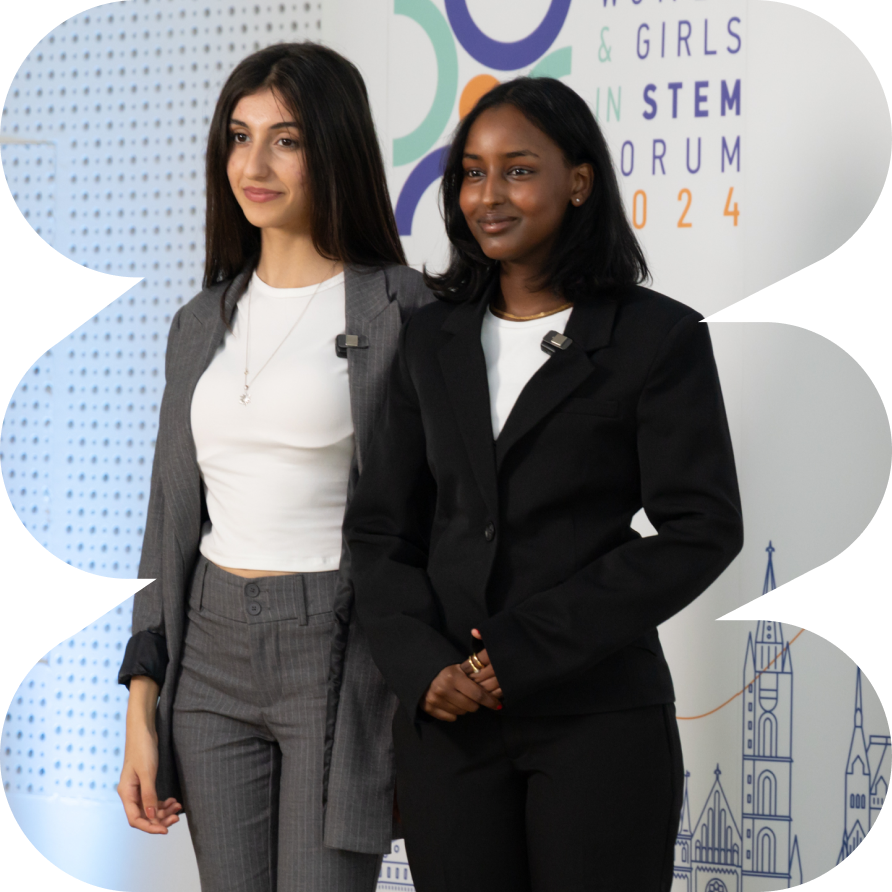
Take on a real-world challenge and design a solution for a more sustainable space 🚀
If selected, you will get to:
- Pitch your idea live on stage at the EIT Women and Girls in STEM Forum 2026 in Prague
- Take part in hands-on workshops and mentoring sessions
- Connect with students from across Europe and engage with experts and innovators
Who Can Participate?
- Motivated girls between 14 to 19 years old
- Each team must consist of 2 to 4 girls, individual participation is not allowed
- Teams can be formed across schools and countries (each team must register under a single country)
- Alumnae of the Girls Go STEM programme (successful completion of at least two introductory courses and one additional course)
For full eligibility requirements and rules, download our Student Challenge Rules & Guidelines.
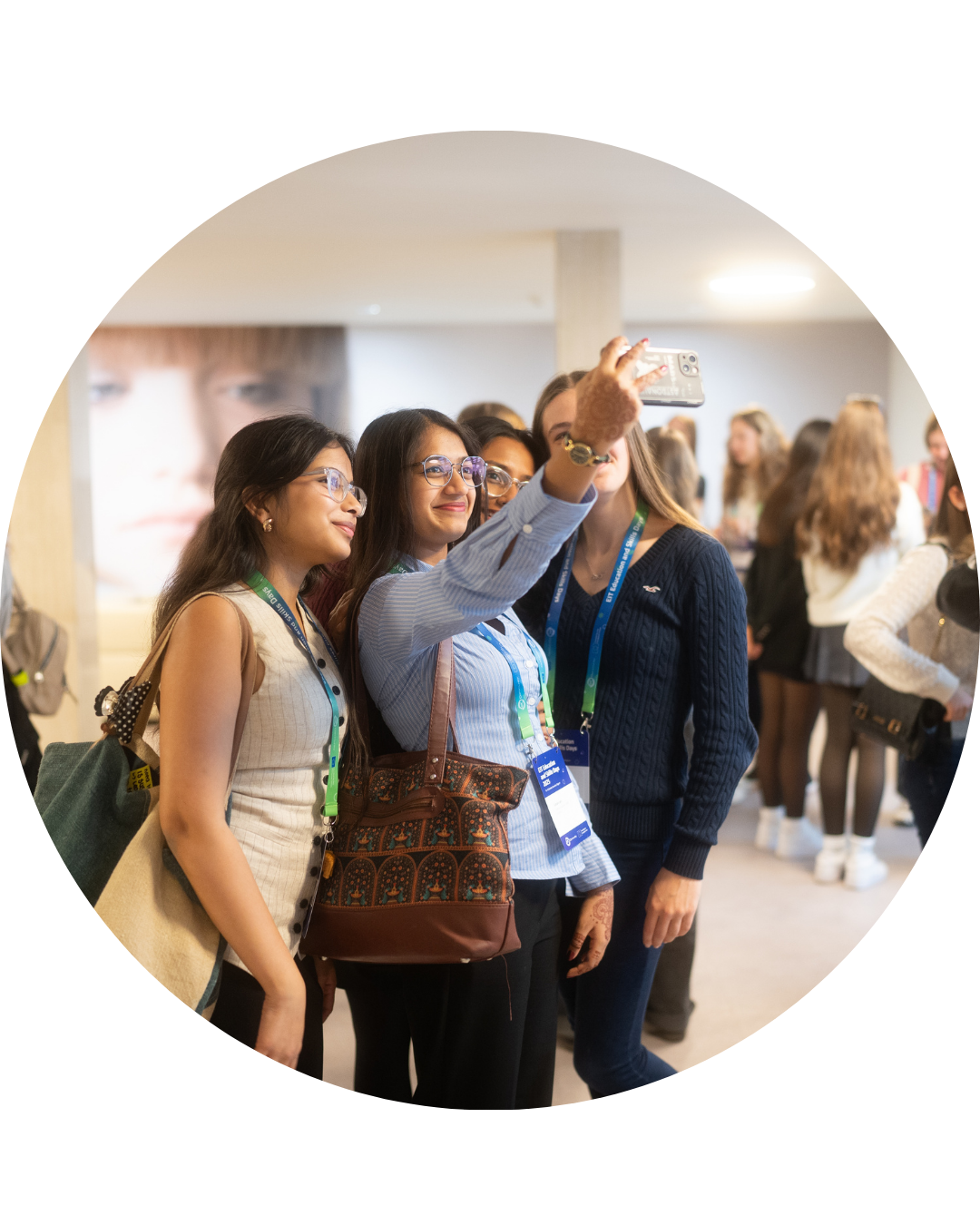
How Does it Work?
Step 1
Complete two introductory courses and one additional course (e.g. on Space Debris) on our learning plattform.
Step 2
Form a team of two to four girls. Download our slidedeck and think about your idea.
Step 3
Create your design (drawing or simple 3D) and add it, together with an explanation, to the slide deck.
Step 4
Create a video presenting your idea convincingly (max. 1 min). Please ensure you have the consent of everyone appearing in the video and that any images and music used are royalty-free.
Step 5
Every participant fills out the consent form. If you are a minor, the form must be signed by your parent or your legal guardian. Merge all consent forms into one single PDF.
Step 6
Complete the application form with all required details and submit it by 27 July 2026, 13:00 CET.
We can’t wait to hear from you!
Ready to pitch your idea?
Download your slide deck and get started! Choose the format that works best for you: you can download a PowerPoint file or work directly in your browser with our Canva template.
How will your submission be evaluated?

- Creativity and Originality
How new and imaginative is your idea? - Design Quality
How well thought-out is your design? Does it make sense, and is it clearly developed from idea to solution? - Reasoning and Justification
How well do you explain your choices? Why did you design it this way, and what trade-offs or assumptions did you consider? - Clarity of Communication
How clearly do you present your idea in your video? Is it easy to follow, well-structured, and convincing?
FAQ
Who can participate?
The competition is open to girls aged 14 to 19 who are ready to collaborate in a team setting. Each team must consist of two to four members; individual participation is not permitted.
Teams may be formed across schools, and international collaborations are encouraged. However, each team must register under one country.
All participants must be alumnae of the Girls Go STEM programme. This means they have successfully completed at least two introductory courses and at least one additional course, ideally the Space Debris course.
For full eligibility requirements and rules, download our Student Challenge Rules & Guidelines.
Can I participate if I have already graduated from high school?
The Student Challenge is open to girls aged 14–19 who are currently in secondary school or have recently graduated but not yet started higher education (university or equivalent). If you have already enrolled in higher education, you are unfortunately not eligible to participate. This is to ensure a level playing field for all teams.
From which countries can participants apply?
Applications are open to participants from the following countries:
Albania, Austria, Belgium, Bosnia and Herzegovina, Bulgaria, Croatia, Cyprus, Czech Republic, Denmark, Estonia, Finland, France, Germany, Greece, Hungary, Ireland, Italy, Kosovo, Latvia, Lithuania, Luxembourg, Malta, Moldova, Montenegro, Netherlands, North Macedonia, Norway, Poland, Portugal, Romania, Serbia, Slovakia, Slovenia, Spain, Sweden, Turkey, UK, and Ukraine.
For full eligibility requirements and rules, download our Student Challenge Rules & Guidelines.
Can a teacher or mentor support our team?
Yes, each team can be supported by one teacher or mentor. If your team is selected for the final in-person event, you must travel with one accompanying adult. A second teacher may attend but their costs must be covered by the school.
For full details, download our Student Challenge Rules & Guidelines.
I completed the challenge in the Space Debris course, does that count as applying to the Student Challenge?
Not quite! The challenge activity inside the “Space Debris: From Orbital Chaos to Sustainable Space” course on our learning platform is part of completing the course itself. The Girls Go STEM Student Challenge 2026 is a separate, Europe-wide competition where teams of 2–4 girls develop a solution to a real space problem, create a design, and submit a slide deck and a short video. To participate, you need to submit a separate application via the form on this page. The course is a great way to prepare — but the two are distinct!
What does our submission need to include?
Each team must submit:
- A slide deck presenting your idea (including your design and an explanation of your material choices and what would happen if the component failed)
- A short video of maximum 1 minute presenting your idea
- Consent forms for all participants, merged into one PDF.
The submission must be in English, applications in other languages will not be considered.
Is a consent form required?
Yes, a signed consent form is mandatory for each participant. If any participant is a minor, the form must be signed by their legal guardian. This is required because submissions are shared with external evaluators. You can decide if giving consent for your video to be published on the initiative’s official channels, in case of being selected as a finalist.
How does the selection process work?
The competition has three stages:
- National level: Volunteer evaluators from the space field review all applications and select one national winner per country
- European level: Girls Go STEM staff rank all national winners and select up to 24 teams to attend the in-person event
- On-site event: The top 3 teams pitch live to a jury of experts, who select the 1st place winner
For full details, download our Student Challenge Rules & Guidelines.
How many teams go to the final event?
A maximum of 24 national winning teams will be invited to the in-person flagship event. The final number depends on budget availability and the overall quality of applications.
Where and when is the EIT Women and Girls in STEM Forum?
The event will take place in Prague from 25 to 26 November 2026. Participants are expected to arrive the day before, on 24 November, and to depart the day after the event, on 27 November.
What costs are covered if we reach the final event?
Girls Go STEM covers the following for up to 4 students and 1 teacher/mentor per team:
- Flights
- Accommodation
- Airport transfers
- Meals during the event
Please note that any visa-related costs incurred for participation will not be covered by the organisers.
Questions about the Student Challenge?
If you can’t find the answer in our FAQ section or the Challenge Rules, feel free to get in touch. We’re happy to help!
Please note that applications are only accepted via the official application form.